Coyote Swap Kits by Platform: What a Complete Kit Includes for Fox Body, SN95, S197, Trucks & Universal
A plain-English buyer's guide to Ford 5.0 Coyote swap kits by chassis — what a complete kit actually includes (mounts, oil pan, headers, control pack, trans adapter), and what changes between a Fox Body, SN95, S197 Mustang, classic F-series truck, and a universal swap. Durable reference logistics, no price guesswork.
Parts for This Guide at a Glance
Coyote swaps into older cars and trucks
High-boost and reliability builds
High-boost and reliability builds
| # | Product | Owner Reviews | Availability | Best For | |
|---|---|---|---|---|---|
| 1 | — | $364.99 In Stock at Amazon | Coyote swaps into older cars and trucks | ||
| 2 | 47 | $52.98 In Stock at Amazon | High-boost and reliability builds | ||
| 3 | 12 | $169.89 In Stock at Amazon | High-boost and reliability builds |
Type “Coyote swap kit” into any search bar and you’ll get everything from a pair of engine mounts to a boxed package with mounts, an oil pan, headers, and a wiring harness — all wearing the same three words. That’s the trap: a “swap kit” isn’t one product, it’s a stack of parts, and the two pieces that actually have to match your chassis are the mounts and the oil pan. Everything else is a shopping list you build around them. This guide is the plain-English reference for what a complete Coyote swap kit contains and how that list changes between a Fox Body, an SN95, an S197 Mustang, a classic F-series truck, and a universal swap into something else entirely. As always here: factual reference logistics, no price guesswork — the kit you need is a set of decisions, not a dollar figure.
If you’re new to the whole idea, start with the Coyote swap guide for the stage-by-stage overview, then come back here to spec the kit for your platform.
What a complete swap “kit” actually includes
Whatever chassis you’re building, a complete Coyote swap comes down to the same subsystems. Naming them is how you turn a vague “swap kit” into a real parts list:
| Subsystem | What it is | Platform-specific? |
|---|---|---|
| Engine & trans mounts | The brackets that locate the engine and gearbox in the bay | Yes — must match your chassis |
| Swap oil pan & pickup | A pan shaped to clear your crossmember/steering | Yes — must match your chassis |
| Headers | Long-tube or mid-length cut to clear the frame and steering | Yes — chassis-specific fit |
| Control pack / harness | The PCM, engine harness, and pedal that run the drive-by-wire engine | Generation-specific, not chassis-specific |
| Transmission adapter | Bellhousing or adapter if you’re not running a factory Ford box | Depends on your gearbox |
| Fuel system | High-pressure pump, lines, and regulator for the returnless setup | Sized to power goal |
| Cooling & accessories | Radiator, accessory drive, brackets | Depends on chassis space |
The two rows marked must match your chassis are the ones that make a swap kit a kit. The mounts locate the engine; the oil pan is what usually decides whether the engine sits where the mounts want it or fouls the crossmember and steering. Get those two right for your platform first — everything downstream hangs off a well-located engine.
The mock-up block: fit it before you drop it
Before you lift a real 400-plus-pound long block into a bay you’ve never fitted a Coyote to, a mock-up block earns its keep. It’s the correct external shape and mounting geometry of the engine without the weight or the risk to a finished long block — set it on a hoist or an engine lift plate, drop it in, and locate mounts, check oil-pan and header clearance, and fabricate brackets without repeatedly wrestling the real engine. The SoloSwap mock-up block below is cut for the Coyote 5.0L/5.2L long block specifically, which is what makes it useful for accurate placement and mount fabrication rather than a generic stand-in. On a scratch-built or heavily fabricated swap it’s one of the highest-leverage tools you can own.
Mock-up block or not, you still have to hoist, hold, and store a 400-plus-pound DOHC V8 — and a Coyote doesn’t rig like an old small block, because there’s no carb flange for a conventional lift plate to bolt to. The engine lift plate and handling tools guide covers what a Coyote lift plate actually fastens to, the bellhousing bolt pattern your engine stand has to match, and the bench tools the build needs once the engine is on the stand.
By platform: what changes chassis to chassis
The mechanical fit — mounts, oil pan, header clearance — is what varies most from one chassis to the next. Here’s the shape of each popular Coyote swap platform.
Fox Body Mustang (1979–1993)
The Fox-platform Mustang ran 1979–1993, and it’s the classic Coyote swap and the most developed: it came with the pushrod 5.0, so the aftermarket has mature Fox-to-Coyote mounts, swap oil pans that clear the K-member, and header options cut for the chassis. The modern DOHC Coyote is wider and taller than the pushrod motor it replaces, so plan the oil-pan and steering-shaft clearance early. Electronics are the main project — a control pack or standalone harness — and the swap wiring guide covers which path fits your trans and generation. This is the platform behind searches like “fox body mustang coyote swap kit,” and it’s about as turnkey as a Coyote swap gets.
SN95 & New Edge Mustang (1994–2004)
The SN95 and New Edge cars are close cousins of the Fox in swap terms — many mount and oil-pan solutions overlap — but the wider engine bay and different K-member change the clearance details. Confirm the mount kit and oil pan are called out for SN95/New Edge specifically rather than assuming Fox parts drop in. Header fitment and steering clearance are again the details to verify before you commit.
S197 Mustang (2005–2014)
The fifth-generation Mustang (S197) ran 2005–2014, and Ford dropped the Coyote into the GT starting with the 2011 model year — so swapping a Coyote into an early S197 (2005–2010, originally a 3-valve 4.6/5.4) is one of the cleaner swaps — you’re putting the engine into a chassis Ford already engineered around it for the later cars. Factory-style mounts, oil pan, and accessory drive from the 2011+ cars become your reference. This is often more of a “modern-drivetrain retrofit” than a fabrication project.
Classic F-Series & trucks
Dropping a Coyote into a classic F-100/F-150 or an OBS truck is a hugely popular swap, and truck-specific mounts and oil pans exist for common year ranges. Trucks give you room, but the crossmember and steering box location drive the oil-pan choice, and header routing has to respect the frame. A truck swap is also where the fuel system and cooling planning matter most, since you’re often adapting an older, larger platform.
Universal & everything else
Muscle cars, hot rods, and imports get done with universal mount kits that give you weld-in or adjustable engine perches so you can locate the engine yourself. This is the most fabrication-heavy path — there’s no bolt-in mount cut for your exact car — and it’s exactly where a mock-up block and a lift plate pay off, because you’ll be test-fitting and tacking brackets repeatedly. Budget time for oil-pan clearance and header fabrication; those are the parts a universal kit can’t solve for you.
New vs. used: where each piece comes from
A swap is the clearest case on this whole site of a two-marketplace build, so buy each piece where it actually lives:
- New bolt-on hardware — mounts, swap oil pans, fasteners, tools, cooling and accessory parts — is Amazon Automotive territory. New, warrantied, and shipped fast.
- Big-ticket used and OEM pieces — Ford Performance control packs, complete donor long blocks, factory PCMs and pedals, and platform-specific used mounts — trade on eBay Motors, using the buttons above. A used control pack or a good donor engine is often the single biggest line item, and eBay is where those change hands.
The swap-kits category collects the new hardware; the eBay rails on this page point at the used/OEM side.
Don’t forget the parts that turn a swap into a driver
A located, wired engine still needs to breathe, seal, and be dialed in:
- Airflow: a cold air intake and chassis-specific long-tube headers — see the long-tube header guide for fit and sizing.
- Fuel: plan the fuel system early; retrofitting fuel into a finished car is miserable.
- Boost foundation: if a supercharger is in the plan, seal the top end with head studs before the boost — the head studs & gaskets guide covers why.
- Tuning: a tuner or programmer dials in the calibration once it runs — see the tuner buyer’s guide.
- Know your engine: confirm which generation you’re swapping with the engine specs & ID reference and the Gen 1 vs Gen 3 guide — the generation sets your wiring and fuel path.
The bottom line
Stop thinking “swap kit” and start thinking two must-match parts plus a shopping list. Nail the mounts and the swap oil pan for your exact chassis — Fox, SN95, S197, truck, or universal — mock up the fit before you commit, then build outward through electronics, transmission, fuel, and exhaust. Buy new hardware on Amazon and the big used pieces on eBay Motors, match your control pack to the engine’s generation, and the swap stops being a mystery and becomes a checklist.
Shopping used or OEM? Try eBay Motors
Live listings for the parts covered in this guide — prices set by the seller.
Recommended Parts for This Guide
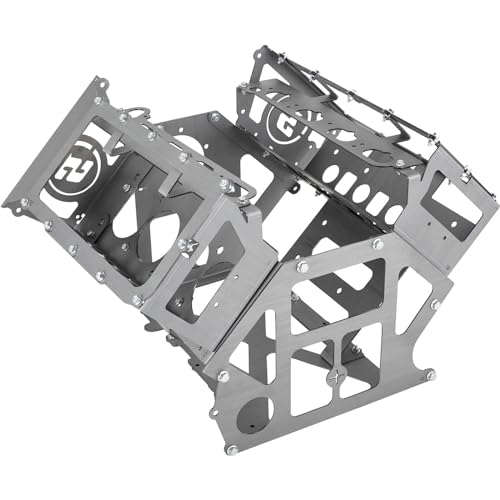
Engine Mock Up Block For Ford Coyote 5.0L 5.2L SoloSwap Long Block | Designed for accurate engine placement and mount fabrication
Engine Mock Up Block For Ford Coyote 5.0L 5.2L SoloSwap Long Block | Designed for accurate engine placement and mount fabrication. Coyote swap hardware — mounts, harnesses, and control-pack parts for dropping a Ford 5.0 Coyote V8 into an older car or truck.
- Simplifies the Coyote swap
- Mounts, harness & control pack

ARP (156-2801) Ford Coyote 5.0L Flywheel Bolt Kit
47 owner reviews
ARP (156-2801) Ford Coyote 5.0L Flywheel Bolt Kit. Head studs and sealing hardware — the foundation of a reliable, high-boost forced-induction Coyote build.
- Seals high-boost builds
- ARP-grade hardware

DPTOOL Engine Timing Tool Kit for Ford Mustang F150 5.0L Coyote 2018-2023 | for Ford Gen 3 5.0L Coyote V8 Engine with Valve Spring Compressor Tool Camshaft Holding Tool Crankshaft Positioning Tool
12 owner reviews
DPTOOL Engine Timing Tool Kit Compatible with Ford Mustang F150 5.0L Coyote 2018-2023, for Third Generation 5.0L Coyote Engine with Valve Spring Compressor Tool Camshaft Holding Tool. Head studs and sealing hardware — the foundation of a reliable, high-boost forced-induction Coyote build.
- Seals high-boost builds
- ARP-grade hardware
Frequently Asked Questions
What is a Coyote swap kit?
How much does a Coyote swap cost?
Can you Coyote swap a Fox Body Mustang?
What generation Coyote is best for a swap?
Do I need a control pack for a Coyote swap?
What is a mock-up block and do I need one for a swap?
Keep reading in the Coyote reference library
Coyote parts are sold by generation and platform far more often than the listings admit. These are the pages that answer whatever this one sends you asking next.
Coyote Swap Guide
The end-to-end process: donor engine, mounting, wiring, cooling, fuel and exhaust.
Coyote Swap Wiring & Control Packs
Control pack vs standalone harness vs re-pinned OEM — the step most swaps stall on.
Coyote Engine Generations by Year
Gen 1–4 by model year and platform, plus a physical ID procedure for an engine with no paperwork.
Lift Plates, Stands & Handling Tools
How to move and hold a 5.0 safely — a Coyote has no carb flange, so the classic V8 lift plate does not apply.
Shop the parts this guide covers
Or browse the full guide library, the ranked top lists, and all Coyote part categories.