Ford 5.0 Coyote Engine Parts Diagram & Reference: Every System, Explained
A plain-English map of the Ford 5.0 Coyote V8 — block and rotating assembly, cylinder heads and Ti-VCT valvetrain, the intake tract, fuel, ignition, cooling, oiling, accessory drive, and exhaust. What each part is, why it matters, and where to find it new on Amazon or OEM/used on eBay Motors.
Parts for This Guide at a Glance
Routine service and reliability
Freeing up top-end airflow and power
Owners chasing flow and the Coyote sound
Coyote swaps into older cars and trucks
| # | Product | Owner Reviews | Availability | Best For | |
|---|---|---|---|---|---|
| 1 | 150 | $56.99 In Stock at Amazon | Routine service and reliability | ||
| 2 | — | $709.45 In Stock at Amazon | Freeing up top-end airflow and power | ||
| 3 | — | $98.50 In Stock at Amazon | Owners chasing flow and the Coyote sound | ||
| 4 | — | $364.99 In Stock at Amazon | Coyote swaps into older cars and trucks |
Type “coyote engine parts diagram” into a search bar and you’re usually after one thing: a clear map of what’s actually on the Ford 5.0 Coyote V8 and what each piece does — before you start ordering parts or planning a build. This page is that map, in plain English. We walk the engine one system at a time, name the parts that matter, flag the Coyote-specific quirks (the internal water pump, Ti-VCT, generation fitment), and point you to the right parts category — with Amazon links for new parts and eBay Motors for OEM and used — for each one.
Think of it as an exploded diagram in words. If you already know the system you need, jump straight to its category; if you’re learning the engine, read top to bottom.
The Bottom End: Block & Rotating Assembly
Everything starts with the aluminum block. Inside it spins the rotating assembly — the forged (or, on some builds, hypereutectic) pistons, the connecting rods, and the crankshaft, all riding on main and rod bearings. This is the foundation that decides how much power the engine can hold. A stock Coyote bottom end is famously strong for a naturally aspirated build, but once you add serious boost, the rotating assembly and the way the heads clamp to the block become the limiting factors.
That clamping load is why head studs and gaskets matter so much on a boosted Coyote: ARP head studs and a quality MLS head gasket are the foundation of any high-horsepower forced-induction 5.0. If you’re planning boost, read the head studs & gaskets guide before anything else, and browse current hardware in the head studs & gaskets category. Dropping a complete engine into another chassis instead? That’s a swap-kits project — start with the Coyote swap guide.
Cylinder Heads & Valvetrain (Ti-VCT)
On top of the block sit two aluminum DOHC cylinder heads, each with four valves per cylinder and dual overhead cams. The Coyote’s signature is Ti-VCT — twin independent variable cam timing — which lets the engine advance and retard the intake and exhaust cams on each bank independently. That’s how it makes a fat torque curve and screams to a high redline.
The parts that make Ti-VCT work are the cam phasers (they physically rotate the cams) and the VCT solenoids (they meter the oil that drives the phasers). Because the whole system runs on engine oil, it’s only as healthy as your oil is clean. Worn phasers or gummed-up solenoids are the classic source of the cold-start rattle and rough idle you’ll read about on every Coyote forum — a known higher-mileage service item covered in the maintenance & wear parts guide. The valvetrain also includes the timing chains, guides, and tensioners that drive the cams (and, as we’ll see, the water pump).
Fitment note: cylinder heads and cams differ by generation. Confirm yours in the gen 1 vs gen 3 comparison before buying head parts.
The Intake Tract: Air Intake → Throttle Body → Manifold
Air enters through the air intake — the airbox or cold air intake and the tube that carries filtered air to the engine. From there it passes the throttle body, which regulates how much air the engine gets, and into the intake manifold, which distributes it evenly to all eight cylinders.
This is one of the most popular areas to modify because the gains are real and the install is straightforward:
- Cold air intakes free up intake airflow and wake up throttle response — see the best cold air intakes top-list and the air intake category.
- Intake manifolds & throttle bodies are where bigger top-end power lives, from the factory Cobra Jet and Boss 302 manifolds to fabricated aftermarket units. The intake manifold & throttle-body guide covers what to match and what to skip; shop the intake-manifolds category.
Going forced induction? A supercharger bolts into this same air path and changes the whole equation — see the supercharger kits guide and the superchargers category.
Fuel System
Air needs fuel. The Coyote’s fuel system starts at the in-tank fuel pump module (which, on most Coyotes, also houses the fuel filter — there’s no separate serviceable inline filter), runs through the fuel rails, and ends at the injectors that spray fuel into each intake port. Gen 3 engines add direct injection alongside port injection, which is a meaningful fitment difference when you shop.
At stock power the factory fuel system is plenty. The moment you add boost or chase big naturally aspirated numbers, fuel delivery becomes a hard limit — bigger injectors, a higher-flow pump, and sometimes upgraded rails. Start with the fuel-system upgrades top-list and the fuel-system category.
Ignition
The Coyote uses coil-on-plug ignition: one ignition coil sitting directly on top of each spark plug, eight of each. It’s a clean, high-energy setup — and an honest one, because a single failing coil throws a rough idle and a misfire code that looks exactly like a worn plug. At higher mileage it’s smart to refresh plugs and coils together. Heat range and gap matter, especially on tuned or boosted trucks. Details and service intervals are in the maintenance & wear parts guide; shop the filters & maintenance category.
Cooling: The Internal Water Pump
Here’s the Coyote quirk that surprises the most people: the water pump is internal, driven off the timing chain and hidden behind the front cover — not bolted to the outside of the block like an old pushrod V8. Add the thermostat, radiator, hoses, and coolant, and that’s the cooling system. Because the pump is buried, a coolant weep is a bigger job than owners expect, and most people address it early rather than let it fail. When you’re in the front cover for a pump, it’s common to refresh timing components at the same time.
Featured part — Coyote water pump
Oiling System
The Coyote’s oil pump feeds pressurized oil everywhere it matters — bearings, the oil filter, and critically the Ti-VCT phasers. The oil pan holds the supply (truck and Mustang pans differ, which matters for swaps). This system is easy to take for granted, but on a Coyote it does double duty: it lubricates and it powers the variable cam timing. Clean oil at the right interval is the cheapest insurance you can buy on this engine — see the maintenance & wear parts guide.
Accessory Drive
On the front of the engine, a single serpentine belt driven off the crank pulley turns the alternator, tensioner, idler pulleys, and — depending on platform — the power-steering and A/C components. Truck and Mustang accessory drives differ, and this is one of the systems you’ll re-plan in a swap. Belts, tensioners, and pulleys are ordinary wear items worth keeping fresh.
Exhaust: Manifolds & Headers
Spent gases exit through the exhaust manifolds (cast factory units) or aftermarket headers, then through the mid-pipe (X-pipe or H-pipe) and cat-back system that gives the Coyote its signature Mustang GT snarl. Long-tube headers are the biggest airflow gain on the exhaust side but the most involved install — the trade-offs are laid out in the long-tube headers guide. Shop everything in the exhaust & headers category.
Tuning: The Part That Ties It Together
Almost every change above — intake, manifold, headers, fuel, boost — wants a tune to be worth its money. A handheld tuner or programmer rewrites the engine’s calibration so the new parts work together and stay safe. It’s less a physical part than the software glue for the whole engine. Start with the tuners & programmers guide and the tuners category.
Putting It Together: A Whole-Engine Shopping Map
If you read this as a build plan, the sensible order is: get the foundation healthy (oil, cooling, ignition — see maintenance); add breathing (intake, manifold, exhaust); support it with fuel and a tune; and only then reach for boost (superchargers) with the head studs & gaskets foundation underneath it. For a broad starting set, the best Coyote bolt-ons top-list and the performance upgrades roundup are good next reads.
Want the engine by the numbers instead of by the systems? The Coyote 5.0 engine specs & identification reference has the firing order, bore and stroke, compression by generation, and how to tell which Coyote you’re looking at.
New consumable and aftermarket parts are linked on each category page. For OEM, take-off, and hard-to-find pieces — a complete long block, factory cylinder heads, a Cobra Jet manifold — eBay Motors is where those trade, and the listing prices are shown live below.
Shopping used or OEM? Try eBay Motors
Live listings for the parts covered in this guide — prices set by the seller.
Recommended Parts for This Guide
![01136 Water Pump w/3 Bolt Pulley Flange for Ford Modular [5.0/5.2L Coyote] [w/Ram Air Effect] V8 Engine, 2013-2022 F150 5.0L, 2015-2021 Mustang 5.0L, 2015-2020 Mustang 5.2L](https://m.media-amazon.com/images/I/315Sulz7ikL._SL500_.jpg)
01136 Water Pump w/3 Bolt Pulley Flange for Ford Modular [5.0/5.2L Coyote] [w/Ram Air Effect] V8 Engine, 2013-2022 F150 5.0L, 2015-2021 Mustang 5.0L, 2015-2020 Mustang 5.2L
150 owner reviews
01136 Water Pump w/3 Bolt Pulley Flange for Ford Modular [5.0/5.2L Coyote] [w/Ram Air Effect] V8 Engine, 2013-2022 F150 5.0L, 2015-2021 Mustang 5.0L, 2015-2020 Mustang 5.2L. Keep your Ford 5.0 Coyote V8 running mile after mile with this routine service part.
- Keeps your V8 running
- OE-quality replacement

Speedmaster 1-148-055 Compatible with Ford 5.0L Coyote 2pc Fabricated Low RamAir 98mm 4 Bolt EFI Intake Manifold Polished
Speedmaster 1-148-055 Compatible with Ford 5.0L Coyote 2pc Fabricated Low RamAir 98mm 4 Bolt EFI Intake Manifold Polished. Intake manifold and throttle-body hardware that frees up top-end airflow on the Coyote V8.
- Frees up top-end power
- Bigger throttle-body flow

Ford Racing M-9448-m50 11-c 5.0l Coyote Exhaust Manifold Gasket And Hardware Kit
Ford Racing M-9448-m50 11-c 5.0l Coyote Exhaust Manifold Gasket And Hardware Kit. Free up flow and unleash the Coyote V8's signature snarl with this bolt-on header or exhaust upgrade.
- Signature Coyote snarl
- Improved exhaust flow
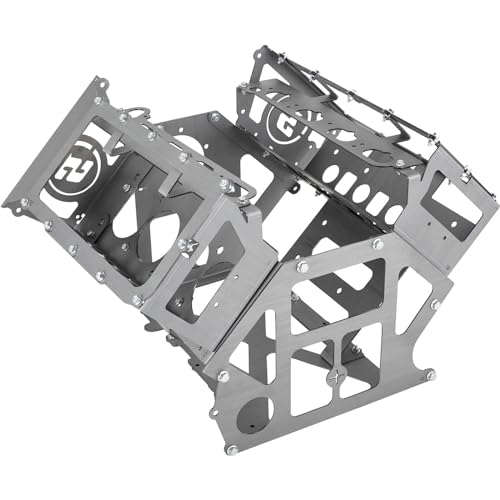
Engine Mock Up Block For Ford Coyote 5.0L 5.2L SoloSwap Long Block | Designed for accurate engine placement and mount fabrication
Engine Mock Up Block For Ford Coyote 5.0L 5.2L SoloSwap Long Block | Designed for accurate engine placement and mount fabrication. Coyote swap hardware — mounts, harnesses, and control-pack parts for dropping a Ford 5.0 Coyote V8 into an older car or truck.
- Simplifies the Coyote swap
- Mounts, harness & control pack
Frequently Asked Questions
What are the main parts of a Ford 5.0 Coyote engine?
Is the Coyote water pump internal or external?
What is Ti-VCT on the Coyote, and what parts does it use?
How do I know which Coyote generation my parts fit?
Where can I buy Coyote engine parts new versus used?
Keep reading in the Coyote reference library
Coyote parts are sold by generation and platform far more often than the listings admit. These are the pages that answer whatever this one sends you asking next.
Coyote 5.0 Engine Specs & Identification
Firing order, bore and stroke, compression, factory power by generation, and how to confirm what you own.
Maintenance & Wear Parts Guide
Oil, filters, plugs, coils and the Coyote-specific wear items that decide how long a 5.0 lasts.
Coyote 5.0 Rebuild Kit Guide
What's in a kit by tier, Gen 1/2/3 differences, and reseal vs rebuild vs a used long block.
Intake Manifold Fitment by Generation
2011–2017, 2018–2023 and 2024+ are three separate worlds — which manifold physically bolts on.
Shop the parts this guide covers
Or browse the full guide library, the ranked top lists, and all Coyote part categories.