Common Coyote 5.0 Problems by Generation — and the Parts That Fix Them
A straight-talking, generation-by-generation rundown of the known Ford 5.0 Coyote weak points — internal water pump failure, cam phaser and VCT rattle, the Gen 1–2 lifter tick, and Gen 3 coolant-in-cylinder — with the exact repair parts, new on Amazon or used/OEM on eBay Motors.
Parts for This Guide at a Glance
Routine service and reliability
Ford 5.0 Coyote owners
| # | Product | Owner Reviews | Availability | Best For | |
|---|---|---|---|---|---|
| 1 | 150 | $56.99 In Stock at Amazon | Routine service and reliability | ||
| 2 | 3 | $85.99 In Stock at Amazon | Ford 5.0 Coyote owners |
The Ford 5.0 Coyote earned its reputation honestly: it’s a strong, high-revving, genuinely durable engine that responds to bolt-ons and takes boost well when it’s built for it. But no engine is without its known weak points, and the Coyote’s are specific enough — and generation-specific enough — that knowing them makes you a smarter buyer, a smarter builder, and a calmer owner. This guide walks the issues that actually come up, by generation, and points at the exact part that fixes each one: new on Amazon, or used/OEM on eBay Motors where the matched, hard-to-find pieces live.
If you’re not sure which generation you’re dealing with, read Gen 1 vs Gen 2 vs Gen 3 first — the model year changes both the parts and the problems.
The one they all share: the internal water pump
Start here because it’s the failure Coyote owners talk about more than any other, and it doesn’t care which generation you have. The Coyote’s water pump is driven off the timing chain and sits behind the front timing cover — not bolted to the outside of the block where you can swap it in an afternoon. When the pump’s seal or impeller wears out, coolant can weep into the front cover and the engine valley instead of dripping onto the driveway, so the first sign is often a slowly dropping coolant level with no puddle to find, or a temperature gauge that starts creeping on the highway.
The repair is labor-intensive because reaching the pump means pulling the accessory drive and the front cover — but the pump itself is a wear part, and catching it early keeps a coolant problem from becoming an overheating problem. If you’re already in the front of the engine for a timing job or a swap, replacing the water pump while you’re there is the obvious move. This is the single most valuable “know your Coyote” fact on this page.
Gen 1 & Gen 2 (2011–2017): phaser rattle and the lifter tick
The early Coyotes are the ones most associated with two noises.
The Ti-VCT cold-start rattle. The Coyote uses variable cam timing on all four cams, controlled by oil-fed VCT solenoids and the cam phasers they drive. On a cold start after the car has sat, a brief rattle as oil pressure comes up is the phasers and solenoids talking. A short chirp is normal; a loud or lingering rattle usually means worn phasers or sticking, varnished solenoids. Fresh VCT solenoids are the first, cheapest fix, and because the whole system runs on oil pressure, staying religious about oil changes with the correct viscosity does more to prevent it than any bolt-on.
The valvetrain “Coyote tick.” The 2011–2017 engines are the ones people mean when they say a Coyote “ticks.” It can be harmless injector chatter, but a persistent top-end tick on a higher-mileage Gen 1–2 can be the roller followers and lash adjusters (the lifters) wearing. Left alone, a dropped or collapsed follower can damage a cam lobe — so on a high-mile early Coyote, refreshing the rocker arms and lifters before the tick turns into metal is cheap insurance, especially during a rebuild or a head-stud job when the valvetrain is already exposed.
Gen 3 (2018+): coolant intrusion and a second round of phaser rattle
The Gen 3 makes the most factory power and is the best boost base, but it has two things a used-engine shopper should know.
Coolant intrusion (2018–2020). A subset of 2018–2020 5.0L engines developed coolant seepage into a cylinder. Ford issued a technical service bulletin and, for many owners, covered a short- or long-block replacement under warranty. The important context: most Gen 3 Coyotes never have it, and a car whose block was already replaced under the program is arguably the safer used buy. If you’re shopping a used Gen 3 engine or swap donor, ask whether it’s an original or a replacement block, and check for coolant loss with no external leak — the same symptom pattern as a bad water pump, which is why diagnosis matters.
Cam phaser rattle, round two. Gen 3 had its own well-publicized cam-phaser rattle that Ford addressed under a service bulletin with updated phasers. The mechanism is the same Ti-VCT system as the early cars — the fix is updated phasers and healthy VCT control — so the same rule applies: clean oil on schedule, and don’t ignore a rattle that grows.
The universal wear items — before they become problems
None of the above is a reason to fear the Coyote. It’s a reason to maintain it deliberately. The parts that keep a Coyote out of the shop are the ordinary ones:
- Oil and filter, correct spec, on time. The VCT system lives or dies on clean oil pressure. This is the highest-leverage maintenance on the engine.
- Coil-on-plug coils and spark plugs at interval. A tired coil throws a misfire that mimics scarier problems; the eBay rail below has OEM coil sets.
- Water pump, inspected as the engine ages. Covered above — the one wear item worth watching closely because of where it lives.
- VCT solenoids as a tune-up item on early engines with any cold-start rattle.
Our Coyote maintenance & wear-parts guide lays out the full checklist and intervals; this page is about the failures those intervals prevent.
Buying the fix: new vs. used/OEM
- New wear and repair parts — water pumps, VCT solenoids, coils, lifter kits, gaskets: Amazon Automotive. The parts featured on this page are new and in stock.
- Used and OEM, generation-matched — a factory water pump and timing cover, updated cam phasers, or a whole replacement short/long block for a coolant-intrusion Gen 3: eBay Motors, using the buttons on this page. These matched, hard-to-find OEM pieces are exactly where eBay — not Amazon — is the real marketplace, and eBay listing prices are shown live so you can compare.
Once your Coyote is healthy, the fun starts: point it at the performance upgrade path, or if boost is the goal, seal the top end properly first.
Shopping used or OEM? Try eBay Motors
Live listings for the parts covered in this guide — prices set by the seller.
Recommended Parts for This Guide
![01136 Water Pump w/3 Bolt Pulley Flange for Ford Modular [5.0/5.2L Coyote] [w/Ram Air Effect] V8 Engine, 2013-2022 F150 5.0L, 2015-2021 Mustang 5.0L, 2015-2020 Mustang 5.2L](https://m.media-amazon.com/images/I/315Sulz7ikL._SL500_.jpg)
01136 Water Pump w/3 Bolt Pulley Flange for Ford Modular [5.0/5.2L Coyote] [w/Ram Air Effect] V8 Engine, 2013-2022 F150 5.0L, 2015-2021 Mustang 5.0L, 2015-2020 Mustang 5.2L
150 owner reviews
01136 Water Pump w/3 Bolt Pulley Flange for Ford Modular [5.0/5.2L Coyote] [w/Ram Air Effect] V8 Engine, 2013-2022 F150 5.0L, 2015-2021 Mustang 5.0L, 2015-2020 Mustang 5.2L. Keep your Ford 5.0 Coyote V8 running mile after mile with this routine service part.
- Keeps your V8 running
- OE-quality replacement
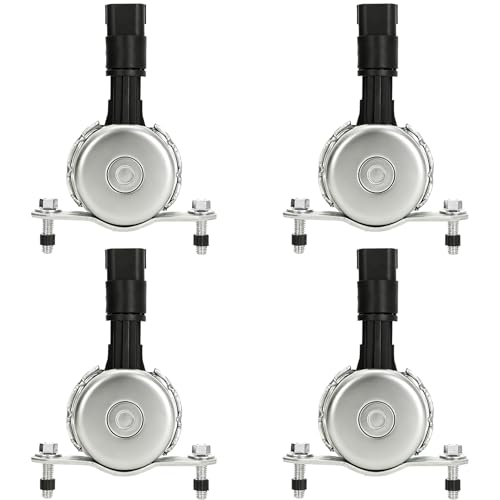
M-6297-M50A 5.0L Coyote Engine VCT Solenoids Compatible with 2013-2017 Ford F-150 5.0L, 2015-2018 Mustang Shelby GT350 5.2L, & 2013-2017 Ford Mustang GT 5.0L - 4-Pack
5 owner reviews
M-6297-M50A 5.0L Coyote Engine VCT Solenoids Compatible with 2013-2017 Ford F-150 5.0L, 2015-2018 Mustang Shelby GT350 5.2L, & 2013-2017 Ford Mustang GT 5.0L - 4-Pack. A quality upgrade or replacement part for your Ford 5.0 Coyote V8.
- Fits Ford 5.0 Coyote
- Quality build

AUCERAMIC Rocker Arm & Valve Lifters Kit for 2011-2017 Ford Mustang | Replaces BR3Z6500A BR3Z6564A | Fits F-150 5.0L V8 Coyote Engine, ford f150 5.0 lifters
3 owner reviews
AUCERAMIC BR3Z6500A BR3Z6564A Rocker Arm & Valve Lifters Kit for 2011-2017 Ford Mustang | Fits F-150 5.0L V8 Coyote Engine, ford f150 5.0 lifters. A quality upgrade or replacement part for your Ford 5.0 Coyote V8.
- Fits Ford 5.0 Coyote
- Quality build
Frequently Asked Questions
What is the most common Coyote 5.0 engine problem?
Do the Coyote generations have different problems?
What causes the Coyote cold-start rattle?
Is the 2018–2020 Coyote coolant-intrusion issue a dealbreaker?
What routine parts prevent Coyote problems?
Keep reading in the Coyote reference library
Coyote parts are sold by generation and platform far more often than the listings admit. These are the pages that answer whatever this one sends you asking next.
Coyote Engine Generations by Year
Gen 1–4 by model year and platform, plus a physical ID procedure for an engine with no paperwork.
Maintenance & Wear Parts Guide
Oil, filters, plugs, coils and the Coyote-specific wear items that decide how long a 5.0 lasts.
Coyote 5.0 Rebuild Kit Guide
What's in a kit by tier, Gen 1/2/3 differences, and reseal vs rebuild vs a used long block.
Gen 1 vs Gen 2 vs Gen 3 Coyote
Which 5.0 is worth building, and what each generation costs you in parts availability.
Shop the parts this guide covers
Or browse the full guide library, the ranked top lists, and all Coyote part categories.